ASOS Ramps Up Global Fashion Marketing

The other night I was spending some time browsing ASOS (one of my favorite online shopping destinations for the past three years) and noticed a few changes to the site, which led me to do some research on the brand. A lot of changes have taken place lately!

Three Website Updates

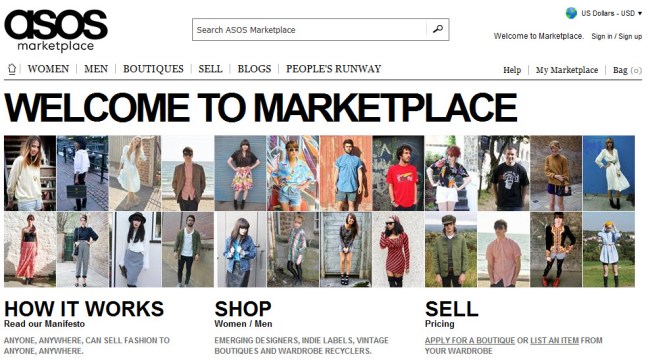
Three new sections of the site caught my eye, Marketplace, Outfits & Looks, and Blogs.

Marketplace

Under the Marketplace section of the site, users can now shop independent boutiques and labels. So far, brands from the UK, US, Ireland, New Zealand, Russia, and Sweden are participating. And, each boutique has a blog so visitors can see what’s new and learn about a brand’s view on fashion and lifestyle.

Outfits & Looks

Under the Outfits & Looks part of the site, users can assemble outfits (very Polyvore inspired) and can upload pictures of themselves (very LookBook.nu style) to be judged. Very smart of ASOS to incorporate ideas from two major fashion websites to make its own site more social. But, it would be nice to only see images that clearly include at least one piece from the ASOS site for inspiration. Maybe this could be an idea for a contest?
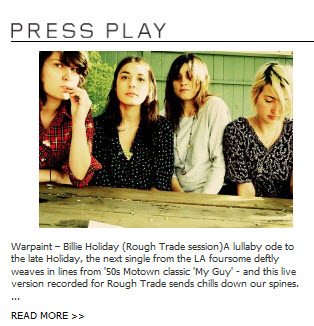
Blog focusing on music

The other new section is Blogs, which is comprised of five blogs. Each one has a different subject, including one about styles seen during Fashion Week and one with a music related theme (guess someone else reads The Vogue Vibes?). Personally I don’t see the point of 5 separate blogs on the main section of the website, unless the brand is trying to ultimately be both a social shopping destination and editorial go-to place. After all, fashion magazines and eCommerce are merging these days.

iOS App

In addition to making the eCommerce site more social, ASOS has also been busy delving into the mobile space by recently launching a shopping app (available on iPhone, iPod Touch, and iPad).

Source: http://www.powerretail.com

During a recent press release, E-Commerce Director James Hart said, “Following year-on-year growth of over 800% in mobile revenue, I’m delighted to release our iPad and iPhone shopping apps.”

Key features of the app include full integration between it, the website, and the mobile site, a “Save for Later” option (something I wish the website offered for a longer period of time), and GPS, for helping with locations where customers can drop off returns.

Global Strategy: with a Focus on Men

ASOS is also working on a marketing campaign to reach for a larger global customer base.

Specifically, the brand hopes to target more male shoppers through a new campaign for which brand has released a few videos that introduce the Urban Tour. ASOS hopes to entice more men to shop on its website by incorporating dance and other forms of pop culture, which is where most men get their fashion inspiration from (not runways). Soon, viewers will be able to click of dancers from some of the campaign videos and purchase.

Here is the teaser video:

Oh, and a few more things- ASOS has a section of the site dedicated to the brand’s favorite Twitter users, its Facebook page is constantly updated (with contests!),  and has found a way to incorporate Instagram. All in all, I’m impressed with all of the digital changes ASOS is making these days. Other fashion brands can learn a LOT by seeing ASOS’ fashion marketing lately.

Anyone else knock-your-stilettos-off impressed?

International Intrigue

Edited by Taylor Davies


This weeks selections for Links a la Mode take us all around the globe and back again. From vintage shopping in Paris and Istanbul to picking the best from fashion weeks abroad, our community is buzzing with news and thoughts from overseas.

Of course we couldn’t leave out some more local stories entirely, so we’ve sprinkled in a selection of fall inspirations from som American bloggers; from menswear to DIY projects to some ethical debates in advertising and journalism.


THE IFB WEEKLY ROUNDUP: LINKS À LA MODE: OCTOBER 6TH

PLEASE READ IF YOU WOULD LIKE TO PARTICIPATE

If you would like to submit your link for next week’s Links à la Mode, please register first, then post your links HERE. The HTML code for this week will be found in the Links a la Mode group will be published later today. ~Jennine

SPONSOR:

New Boots at Shopbop: Jill Sander, Sam Edelman, Jeffrey Campbell, KORS, Ash,Costume National, Hunter Boots, Sorels, Frye, Kelsi Dagger, Juicy Couture, Minnetonka, NDC, Coclico, Vera Wang, & Joie.

Branding in Motion: Part 4 of 4

An interview with Russell Volckmann on Branding in Motion

Image by Extra Medium

Ashley: Should (online) fashion brands keep anything extra in mind that brands in other markets may not have to worry about?

Russell:

Like any brand, fashion brand goods also require unique and lasting brand features to be successful in the market. Fashion, as the term implies, is fleeting. And herein lies a unique challenge for fashion brands–or any other fast moving consumer products (also called, “fast consumer”). How to maintain a solid unwavering and strong brand foundation, while at the same time maintaining the perception of a high level of innovation that customers expect is important, which requires constant change in brand expression. The answer will be different for each unique brand, but the challenge is the same.

Also, differentiation on the basis of brand is vitally important in case of fashion because competition is very high and each fashion brand needs to say something different. Without the differentiation created in the brand (including the product expression of that brand), the fashion brand can easily fall into becoming a commodity. And like all other commodities, the product becomes price or value based, rather than aspirationally based. Commoditization can kill any company, fashion or not. When price becomes the primary reason people buy, your fashion brand will always be susceptible to someone cheaper. In other words, fashion brands need to maintain a high level of aspiration (to buy) among customers. Specifically, I think attention to target lifestyle is key.

Interestingly, established luxury brands continue to do well even in down markets because they maintain that high level of quality and aspiration. Price may be more important in slow times, but customers often turn to lasting quality anyway, abandoning the cheaper, disposable, less innovative, lesser quality alternatives. Whatever target price point or customer, a fashion brand needs a clear proposition of fashion and value that is unique and drives brand expressions faithfully.

Part 1 > What are some key things to consider when creating an online based brand?

Part 2 > What sort of “due diligence” should brands do when conceptualizing their name/logo/etc?

Part 3 > What’s the first thing an (online) brand should do if they have a #prfail (they really mess up online)?

Branding in Motion: Part 3 of 4

An interview with Russell Volckmann on Branding in Motion

Image by Extra Medium

Ashley: What’s the first thing an (online) brand should do if they have a #prfail (they really mess up online)?

Russell:

Very relevant question and interesting in the way it was phrased. It implies a PR answer, but in fact more relevant for the brand attributes that need to drive the PR answer. In a sense, due diligence for any brand planning should be a disaster planning exercise also. Life happens, people mess up. However, by remaining faithful to the key attributes of your brand that early on should have been developed, those attributes should provide the answer to cleaning up messes.

The nuances of that PR response may be different for each company, but I think the basic tenets remain the same. Whatever nuances help shape the answer, the key is to be honest, authentic, and genuinely care enough to solve the challenge openly and by involving the stakeholders affected by the problem or challenge. Employees. Customers. Communities. The world. Because if you don’t do these things, and stay in alignment with your brand values, people will see right through the facade and begin shaping your brand in ways far worse than the mess-up itself. Sometimes irreparably so. As I mentioned at the beginning of our conversation, no brand can hide from the Internet, which has become a very dynamic and constantly moving forum for your brand.

Next time > Should (online) fashion brands keep anything extra in mind that brands in other markets may not have to worry about?


Part 1 > What are some key things to consider when creating an online based brand?

Part 2 > What sort of “due diligence” should brands do when conceptualizing their name/logo/etc?

Part 4 > Should (online) fashion brands keep anything extra in mind that brands in other markets may not have to worry about?

Branding in Motion: Part 2 of 4

An interview with Russell Volckmann on Branding in Motion


Image by Extra Medium

Ashley: What sort of “due diligence” should brands do when conceptualizing their name/logo/etc?

Russell:

“Due diligence” is an apt term, and not performing due diligence can be very costly to a company. A company needs to perform a great deal of proper positioning and planning before getting to the point of expressing the brand in terms of a company name, product name, visual identity (logos, word marks, supporting graphical devices), or other brand expressions. Spending the time and effort performing this initial due diligence will reap great rewards. The positioning and planning leads to vital platforming on which all brand expressions are built. Conversely, skipping important brand development steps leads to uninformed choices. Uniformed choices in brand will lead to mistakes in developing brand expressions such as logo or name, for example. As a building with no foundation will topple over, so will a brand without its proper platform or foundation.

Typically companies should not attempt to perform brand development in-house, and rather hire an outside professional branding agency or professional consultancy. Why? A high expertise level of respected and expert branding professionals is one reason. Another reason is that it is nearly impossible to be objective with one’s own brand. Companies tend to overlook or are unaware or vital questions concerning their brands. And a great deal of challenges await brand development internally, externally, and in the interaction between both. A simple metaphor is looking in the mirror and not seeing what everyone else is seeing.

Since the logo is something everyone recognizes as one brand expression, let’s continue to use the logo as an example.

One symptom of not performing due diligence is the common mistake of hiring graphic designers for a logo. Companies often choose designers simply because they can design, and without looking at key market, business, brand landscape (brandscape)–plus other objectives and challenges that need to drive the visual expression of that brand identity. Successful logos are not designed in a vacuum, nor are they the result of ‘liking’ or ‘not liking’ the design. And this is where so many visual identities fail.

Rather, a successful visual identity is driven by numerous factors and objectives that a logo, for example, needs to accomplish. Does it differentiate? Does it resonate with key customers? Is it flexible enough to work in a near infinite variety of environments? On products? Online? Is it immediately recognizable? Does it communicate the key drivers uncovered early on during a comprehensive brand discovery and platforming process? Will it outlast fads? Is there potential for lawsuits due to similar aspects causing intellectual property infringement? Is it meaningful? Does it resonate with company internal stakeholders after a proper gestation period? People gravitate toward the familiar because they feel comfortable with it. However, feeling familiar means doing things the same as everyone else, which does not differentiate, and therefore offers no unique value to stakeholders (internally or externally). Otherwise, no reason for anyone to buy. So, now you see why ‘liking’ or ‘not liking’ really has nothing to do with how a successful logo or visual identity is developed. Yes, a logo should work aesthetically. But like so many other brand expressions, a logo needs to create a meaningful brand experience. And thankfully, expert brand agencies have processes for getting brands there.

Next time > What’s the first thing an (online) brand should do if they have a #prfail (they really mess up online)?

Part 1 > What are some key things to consider when creating an online based brand?

Part 3 > What’s the first thing an (online) brand should do if they have a #prfail (they really mess up online)?

Ann Taylor for the College Girl

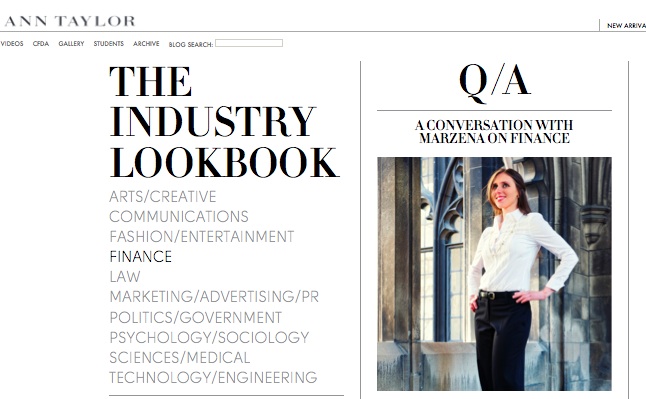
Have you checked out Ann Taylor’s “Style for Students” website yet? In the past I reviewed the brand’s social media efforts, and the brand’s new site addition, to me, comes across as one more way for Ann Taylor to both jump further into the fashion conversation online and focus on an even younger audience than in the past.

The site is split into different parts, including a great section where readers can find interviews the brand has done of women across a wide range of industries, including one with a woman in the finance industry just two years into her career. The interviewee answered questions pertaining to interview tips, what her job entails, and what role fashion plays in her work life. Oh, and the ever popular question of what to wear to an interview.

Interviews can be searched by industry, and it’s nice to see that the brand went beyond the style of women working in the fashion and entertainment industries.

Readers may also explore how other college girls from across the country are styling their Ann Taylor pieces. So far only 10 schools are listed (glad to see BU represented!), but I imagine this list will only grow.

If you “like” your favorite looks on the site, you’re automatically entered to win a $1,000 gift card to Ann Taylor. My only question now is, with all this focus on students, what about college girls on a college budget? Do student shoppers get a discount?

Branding in Motion: Part 1

An interview with Russell Volckmann on Branding in Motion


Image by Extra Medium

Ashley: What are some key things to consider when creating an online based brand?

Russell:

The first key assumption regarding developing any brand today is that virtually no brand can hide from the Internet. So whether a company’s business is conducted primarily online or offline is of little consequence. Brands are no longer only crafted and shaped internally then broadcasted hierarchically downward toward audiences to digest as receptacles of the brand. Company key stakeholders (employees, customers, peers, competitors) constantly interact with your brand online and shape that brand to suit their needs. And that includes a company’s brand messaging, visual identity, product or anything borne from that brand.

As a simple example, a company may find its logo in locations or environments that the original creators never intended. On social networks such as Facebook. On blogs or other online vehicles in the presence of other branded entities. Unintentionally co-branded alongside other brands. Placed in the midst of typography and colors that are not part of the company’s design system. And this has profound implications in terms of how flexible any brand needs to be—not just the logo or visual identity, but across a wide spectrum of brand expressions..

While the creators of a brand may certainly guide the intended use of the logo, they essentially have no control whatsoever over how it is used externally. Therefore an amazing amount of thought, strategy and testing needs to go into preparing a brand for the wild world externally.

In the familiar example of the logo, we need to ask how visually flexible is it in order to accommodate X number of usage scenarios, in addition to all the hard work that the logo needs to perform in order to live up to the brands core drivers–what we call the Brand Motor(TM). The logo seems simple. But in fact, distilling meaning into what drives an expression like the logo not so simple—let alone creating an expression that is flexible enough to survive in a myriad of environments—environments that are constantly in motion. That takes planning.

Just to be clear, though, the logo is not the brand. It is only one expression of the brand among sometimes hundreds of other key brand expressions specific to any one brand.

Next timeWhat sort of due diligence should brands do when conceptualizing their name/logo/etc?

Part 3 > What’s the first thing an (online) brand should do if they have a #prfail (they really mess up online)?

Part 4 > Should (online) fashion brands keep anything extra in mind that brands in other markets may not have to worry about?

I’m Feeling Lucky

I treated myself to a new magazine this weekend, and if you couldn’t tell from the title of this post, I chose Lucky Magazine.

Not only was I (and still am) super excited about the piece on “90 Days of Outfits: Our genius styling guide to dressing for $5 a day!”, but was intrigued how technology was integrated throughout the magazine.

Here are my five favorites:

1. Behind-the-scenes video of select parts of the mag that draw you to the website by way of mobile-friendly bar codes, text message, or simply typing in luckymag.com on your browsers. Videos of Heidi Klum’s photo shoot, the last nine outfits of the 90 featured in the piece mentioned above, and how to get frizz-free hair with the products discussed on page 153 are some of the behind-the-scenes looks you can find. (Note: you must first download the free app at gettag.mobi before scanning the codes).

2. Invitation to connect with Lucky’s “digital concierge” by way of iPhone app or LuckyatYourService.com. Basically, by setting up an account on this site, you can save time shopping at work (whoops, on your lunch break). Browse items on the site by brand, price, color, and size and then choose the option to either find it online (like any other social shopping site ) or find it near you. After entering a few more details, the Lucky Concierge team will contact the store to see if the piece is available and put it on hold for you to pick up later in the day. Oh yeah, and you’ll hear back from the Lucky team within the hour during the business day by email or text confirming how to go about picking up your purchase.

3. Every page with items of clothing include a text-to-buy option, that lets you immediately purchase favorite items from the issue without having to hunt all over.

4. Blogger highlight #1: Lisa Mayock and Sophie Buhai of Venacavablogspot.com got a shout out for their clothing designs and blog, and between Feb. 7 and 11, guest blogged for Luckymag.com about the Lucky blogger conference, FABB, and New York Fashion Week.

5. Blogger highlight #2: A showcase of seven inspirational style bloggers and their spring trend obsessions, including the women behind alltheprettybirds.blogspot.com, seaofshoes.typepad.com, guestofaguest.com, manrepeller.com, naag.com, decadediary.typepad.com, theglamourai.com.

Great read this weekend, but the tricky part will be to stick to my budget since I’d really like to now own the wedges in the Top-Sider ad… the trench on page 91… the the woven belt on page 100, the purple dress on page 134… the dress on page 136… the Fendi on pae 138… the floral dress on page 195… the pleated skirt on page 199… the leather dress on page 202…

My Introduction to Christian Siriano’s Closet

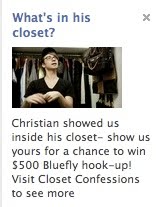
For all the complaining I’ve been doing about Facebook lately, I was pretty excited when this targeted ad showed up alongside my Facebook news feed a few days ago (was it my Project Runway mention in my profile perhaps?)!

It’s my all time favorite ad so far because a) I love Christian and b) I love Bluefly.com’s “Closet Confessions” idea. The social shopping site, founded in 1988, sponsored Project Runway, so it’s only fair that the designers pay their respects.

Bluefly’s confession series also highlights other big names, but I’m sticking with Siriano as my favorite for now. Check out Siriano’s closet here. Though I’m not so sure about Siriano’s “gold moment”,  I can forgive, and it was pretty fun to learn more about his personal style.

Now, if only I could get my hands on an outfit from his first collection…

Ann Taylor’s Foray into Social Media

There was a point in my life when I never thought I’d shop at Ann Taylor, yet ever since Ann Taylor’s head designer came on board, my praise of the brand has grown. While the designs are finally completely in line with my aesthetic (thank you, Lisa Axelson), the brand’s social media strategy has been pretty great lately as well.

First, I noticed a contest on Polyvore (a social shopping and digital scrapbooking site). After 2,008 entries, five winners were chosen to receive $200 gift cards and have their sets featured on Facebook. Unfortunately, I didn’t win, but I was pleased to get a response on Twitter after I promoted my set.

After I heard directly from the brand, I checked out their Facebook page and was impressed to see a very well put together landing page called “AT Insider”.  The page includes a link to work chic styles, with a mention of their wear-to-work wardrobe contest, also sponsored by InStyle. Also on the page is a lookbook, the brand’s Twitter feed, and the five winning looks from the Polyvore contest you can choose your summer style from- in case you were wondering, I like the “Refined Chic” outfit the best. You can additionally see how other fans are wearing the brand, or show off your unique twist on Ann Taylor looks. My favorite part of the page is definitely seeing how other Ann Taylor fans are wearing their purchases.

Two things to improve upon:
*No evident organization/schedule to the Facebook or Twitter posts
*No link to the official Twitter account from the website

And now,  two of the looks on my list of must-haves for this season:

HP’s "Let’s Do Amazing" Campaign Taps Famed Photographer Annie Leibovitz

If you haven’t been on Hewlett-Packard’s Facebook page or viewed their YouTube channel recently, then you may not have caught the latest addition to their unaired “Let’s Do Amazing” campaign. On March 11th, the campaign began, as Rhys Darby of Flight of the Concords began his quest for amazing ways people are using HP products around the world.

The newest video features famed photographer (and photographer of my all-time favorite Vogue spread: Alice in Wonderland) Annie Leibovitz, using HP’s DreamColor printer.

So how did the portrait photographer end up in a printer ad? Some say financial issues, but I’m not judging. I just like that the is something a little different, and those from the fashion world get to enjoy seeing Annie in front of the camera lens for a change.

Dr. Dre and UPS also make appearances.

As far as the strength of the overall campaign? You tell me.