Three Creative Ways Twitter and Fashion Mix “Offline”

Having a shirt from the Twitter office is pretty cool. But now it might be fun to step it up a notch and involve Twitter further in my wardrobe. Here are three pretty cool options:

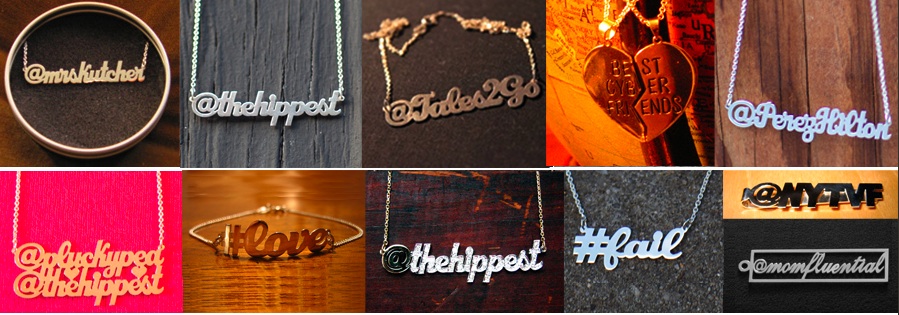
The Twitter handle necklace

I ordered one of these for my friend’s graduation and she loved it. Customers have the option of buying a silver or gold necklace, custom made, to reflect their Twitter handle (or hashtag of choice).

Source: Survival of the Hippest

The Twitter dress

Just  this summer, Microsoft Research introduced a dress that displays tweets. How does it work? By way four Lilypad Arduinos, a laptop, a projector, and a Processing sketch. Interestingly, the dress is mainly made out of paper; a nice juxtaposition to the digital words that flit across the skirt. Check out Electricfoxy’s interview with Asta Roseway for more details!

Source: http://www.ecouterre.com/

The Tweet Mirror

If you’re not sure if you look good in a particular outfit, and need instant feedback, check out the Tweet Mirror, by Netherlands-based Nedap Retail. All you have to do is stand in front of the mirror in an outfit you’re deciding on and take a picture. The photo will be sent to friends on Twitter and answers will be received by cell phone. Last year, this invention was awarded a retail technology prize.

Source: DailyDOOH

Needless to say, Twitter is becoming more ingrained in the fashion industry “offline”. What do you hope to see next?

Branding in Motion: Part 4 of 4

An interview with Russell Volckmann on Branding in Motion

Image by Extra Medium

Ashley: Should (online) fashion brands keep anything extra in mind that brands in other markets may not have to worry about?

Russell:

Like any brand, fashion brand goods also require unique and lasting brand features to be successful in the market. Fashion, as the term implies, is fleeting. And herein lies a unique challenge for fashion brands–or any other fast moving consumer products (also called, “fast consumer”). How to maintain a solid unwavering and strong brand foundation, while at the same time maintaining the perception of a high level of innovation that customers expect is important, which requires constant change in brand expression. The answer will be different for each unique brand, but the challenge is the same.

Also, differentiation on the basis of brand is vitally important in case of fashion because competition is very high and each fashion brand needs to say something different. Without the differentiation created in the brand (including the product expression of that brand), the fashion brand can easily fall into becoming a commodity. And like all other commodities, the product becomes price or value based, rather than aspirationally based. Commoditization can kill any company, fashion or not. When price becomes the primary reason people buy, your fashion brand will always be susceptible to someone cheaper. In other words, fashion brands need to maintain a high level of aspiration (to buy) among customers. Specifically, I think attention to target lifestyle is key.

Interestingly, established luxury brands continue to do well even in down markets because they maintain that high level of quality and aspiration. Price may be more important in slow times, but customers often turn to lasting quality anyway, abandoning the cheaper, disposable, less innovative, lesser quality alternatives. Whatever target price point or customer, a fashion brand needs a clear proposition of fashion and value that is unique and drives brand expressions faithfully.

Part 1 > What are some key things to consider when creating an online based brand?

Part 2 > What sort of “due diligence” should brands do when conceptualizing their name/logo/etc?

Part 3 > What’s the first thing an (online) brand should do if they have a #prfail (they really mess up online)?

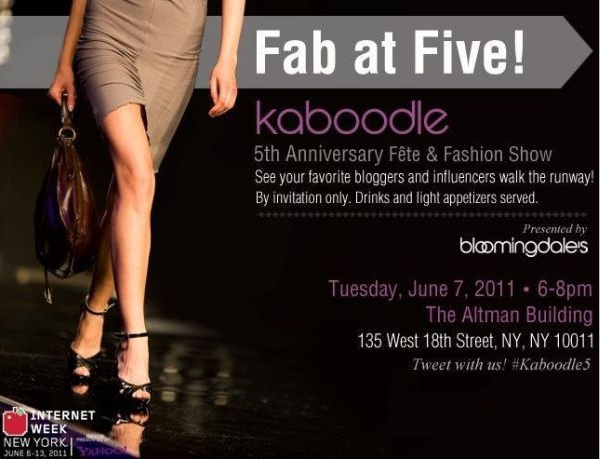
Kaboodle’s Fab @ Five Fête & Fashion Show

For those who don’t already know, New York is currently celebrating Internet Week. And these days, no such celebration would be complete without at least one fashion related event.

Last night, Kaboodle, the largest social shopping website, hosted the first ever crowd sourced fashion show in conjunction with Bloomingdales. The looks that went down the runway were selected through a Kaboodle hosted styleboard contest and worn by models of the media and blogger personality variety. Personalities like Meghan Peters of Mashable, and Yuli Ziv of Style Coalition strutted their stuff for the invite-only crowd.

I think creating a crowd sourced fashion show is certainly clever, especially considering how hot content (think, curated content through sites like Everlane) and events (think, Plancast) created and curated “by the people” have become these days.

Off the top of my head I can’t think of a better way for a social shopping to celebrate a five year anniversary, can you?

View photos of the event here and see a video of the event here.

Digital Fashion Trend: Content Curation

I’ve recently been involved in two conversations about curated content; discussing how it works, if it works, and if it’s the next big thing. I’ve also noticed that some of my favorite go-to fashion sites have content curated by their users. And just a few days ago, e-tailer Rue La La released a customer curated boutique. Fans of the brand’s Facebook page had the opportunity to vote for their favorite picks, which were then displayed on the Rue La La website.

Needless to say, this is one hot topic of conversation in 2011.

Defining Content Curation

An article I found from online marketing blog TopRank, includes insights about curated content by 10 thought leaders.

Paul Gillin, Consultant and Author of The New Influencers and Secrets of Social Media Marketing, defined content curation as, “the process of assembling, summarizing and categorizing and interpreting information from multiple sources in a context that is relevant to a particular audience”. He went on to suggest that this will be “absolutely essential” to content marketing’s future because of how media is evolving.

Another point discussed in the article was about who should curate the content. David Meerman Scott, author of New Rules of Marketing & PR and World Wide Rave said, “… the challenge is how can you do it in a way that’s interesting. You have to make a decision: Do you let the machines do the aggregation and the selection or do you let humans do the selection. It’s a huge decision, humans or machines.” What Scott was referring to of course, is the aggregation of data that sites like Expedia and Google have been doing for years.

I agree with both thought leaders. Content curation has to have some human element involved to work properly, otherwise the data is really just as aggregated as it has been for years. And, in age where you can quickly bookmark your favorite articles and post live updates from events from Twitter categorized by hashtags, the online world is only getting increasingly full of “stuff”. It is becoming increasingly important to implement savvy ways of sifting through the clutter to find and organize the information you really want.

Since online content is forever growing in volume, and the media landscape is expanding far beyond traditional publications (New York Times, Elle, etc.) to user generated content, it may be only a matter of time before the “go-to” sites for news (and online fashion inspiration) are more often than not, curated sites.

Curated Fashion Sites
Everlane: This site brings creative thinkers with good taste together. Each creative has a profile page, which shows their favorite menswear items found across the web. The company’s next step is to launch a store, for which these people will choose what’s actually sold. According to the site’s About Me page, they aim to bring boutique shopping online.

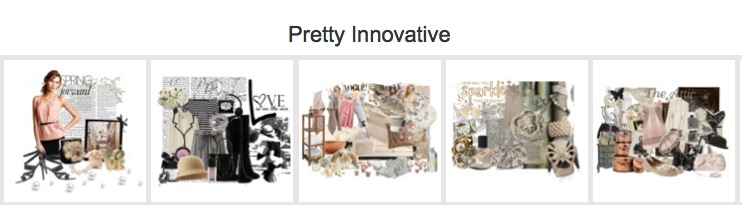
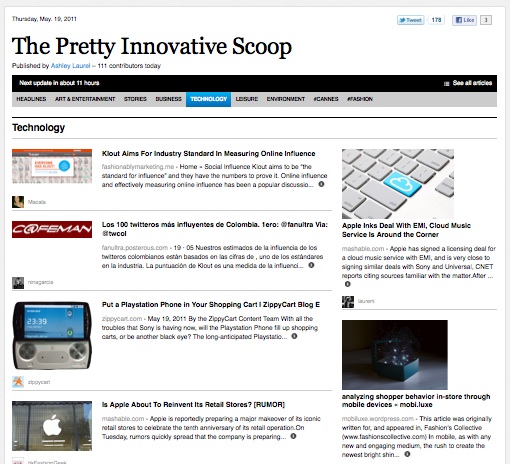
Paper.li (The Pretty Innovative Scoop): Paper.li lets Twitter users turn their newspapers into digital newspapers. While my paper, The Pretty Innovative Scoop, shows content that select people in the fashion and tech scene tweet, there are a growing number of fashion related digital papers, like the popular The Fashion-Tweets Daily.
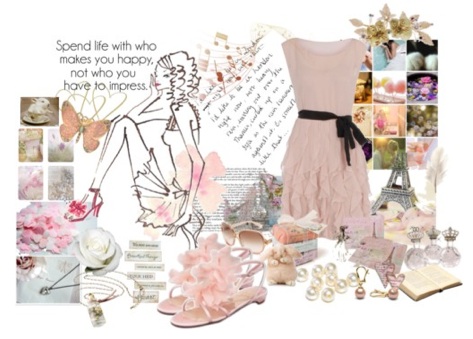
Polyvore: This site is an online social shopping hub where users can bring in content from across the web to create “sets”, namely fashion looks. With 6.5 million monthly unique visitors, Polyvore is chock full of creative styling ideas that can be found in the form of digital collage.
Club Monaco’s CM Culture Club:Retail brand Club Monaco created this addition to their site about eight months ago so that each month, employees around the globe could share photos of their favorite styles, foods, and people. The page also features content added by well respected industry thought leaders in fields such as fashion and media.

Things to Think About

  • Can content be fully curated electronically after initial setup is complete?
  • Do all of the above sites fit within the scope of what curated content is all about?
  • How do you feel that curated content will fit into the media landscape in one year from now?
  • What other fashion websites curate content in a unique way?

Branding in Motion: Part 3 of 4

An interview with Russell Volckmann on Branding in Motion

Image by Extra Medium

Ashley: What’s the first thing an (online) brand should do if they have a #prfail (they really mess up online)?

Russell:

Very relevant question and interesting in the way it was phrased. It implies a PR answer, but in fact more relevant for the brand attributes that need to drive the PR answer. In a sense, due diligence for any brand planning should be a disaster planning exercise also. Life happens, people mess up. However, by remaining faithful to the key attributes of your brand that early on should have been developed, those attributes should provide the answer to cleaning up messes.

The nuances of that PR response may be different for each company, but I think the basic tenets remain the same. Whatever nuances help shape the answer, the key is to be honest, authentic, and genuinely care enough to solve the challenge openly and by involving the stakeholders affected by the problem or challenge. Employees. Customers. Communities. The world. Because if you don’t do these things, and stay in alignment with your brand values, people will see right through the facade and begin shaping your brand in ways far worse than the mess-up itself. Sometimes irreparably so. As I mentioned at the beginning of our conversation, no brand can hide from the Internet, which has become a very dynamic and constantly moving forum for your brand.

Next time > Should (online) fashion brands keep anything extra in mind that brands in other markets may not have to worry about?


Part 1 > What are some key things to consider when creating an online based brand?

Part 2 > What sort of “due diligence” should brands do when conceptualizing their name/logo/etc?

Part 4 > Should (online) fashion brands keep anything extra in mind that brands in other markets may not have to worry about?

Polyvore’s Blogger Network Gets a Mini Makeover

Hey fashion bloggers, if you haven’t heard, Polyvore has upped the ante on set embed options so you can resize your sets before posting on your blog. And, the Polyvore Blogger Network now has a new home on the Polyvore site so bloggers can keep up to date on blog related developments.

As a member of the Polyvore Blogger Network, I’ve been added to their email list about blogger specific contests and information about upcoming meetups (when’s the next one in San Francisco?!).

After five years, Polyvore has 6.5 million unique visitors per month who create a plethora of digital collages featuring a super wide range of brands, celebrity style icons, and much beloved fashion bloggers.

Connect with me on Polyvore so we can inspire each other.

Branding in Motion: Part 2 of 4

An interview with Russell Volckmann on Branding in Motion


Image by Extra Medium

Ashley: What sort of “due diligence” should brands do when conceptualizing their name/logo/etc?

Russell:

“Due diligence” is an apt term, and not performing due diligence can be very costly to a company. A company needs to perform a great deal of proper positioning and planning before getting to the point of expressing the brand in terms of a company name, product name, visual identity (logos, word marks, supporting graphical devices), or other brand expressions. Spending the time and effort performing this initial due diligence will reap great rewards. The positioning and planning leads to vital platforming on which all brand expressions are built. Conversely, skipping important brand development steps leads to uninformed choices. Uniformed choices in brand will lead to mistakes in developing brand expressions such as logo or name, for example. As a building with no foundation will topple over, so will a brand without its proper platform or foundation.

Typically companies should not attempt to perform brand development in-house, and rather hire an outside professional branding agency or professional consultancy. Why? A high expertise level of respected and expert branding professionals is one reason. Another reason is that it is nearly impossible to be objective with one’s own brand. Companies tend to overlook or are unaware or vital questions concerning their brands. And a great deal of challenges await brand development internally, externally, and in the interaction between both. A simple metaphor is looking in the mirror and not seeing what everyone else is seeing.

Since the logo is something everyone recognizes as one brand expression, let’s continue to use the logo as an example.

One symptom of not performing due diligence is the common mistake of hiring graphic designers for a logo. Companies often choose designers simply because they can design, and without looking at key market, business, brand landscape (brandscape)–plus other objectives and challenges that need to drive the visual expression of that brand identity. Successful logos are not designed in a vacuum, nor are they the result of ‘liking’ or ‘not liking’ the design. And this is where so many visual identities fail.

Rather, a successful visual identity is driven by numerous factors and objectives that a logo, for example, needs to accomplish. Does it differentiate? Does it resonate with key customers? Is it flexible enough to work in a near infinite variety of environments? On products? Online? Is it immediately recognizable? Does it communicate the key drivers uncovered early on during a comprehensive brand discovery and platforming process? Will it outlast fads? Is there potential for lawsuits due to similar aspects causing intellectual property infringement? Is it meaningful? Does it resonate with company internal stakeholders after a proper gestation period? People gravitate toward the familiar because they feel comfortable with it. However, feeling familiar means doing things the same as everyone else, which does not differentiate, and therefore offers no unique value to stakeholders (internally or externally). Otherwise, no reason for anyone to buy. So, now you see why ‘liking’ or ‘not liking’ really has nothing to do with how a successful logo or visual identity is developed. Yes, a logo should work aesthetically. But like so many other brand expressions, a logo needs to create a meaningful brand experience. And thankfully, expert brand agencies have processes for getting brands there.

Next time > What’s the first thing an (online) brand should do if they have a #prfail (they really mess up online)?

Part 1 > What are some key things to consider when creating an online based brand?

Part 3 > What’s the first thing an (online) brand should do if they have a #prfail (they really mess up online)?

Ann Taylor for the College Girl

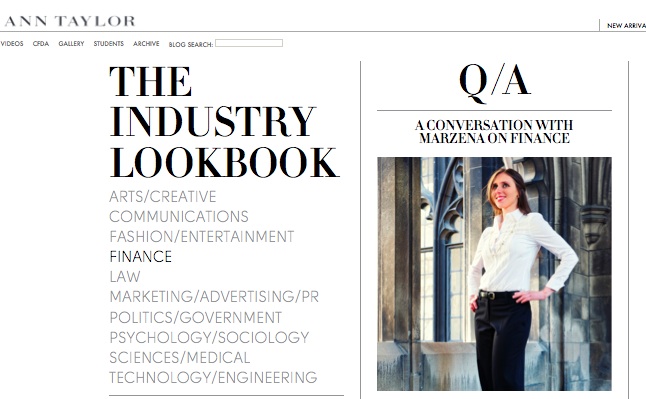
Have you checked out Ann Taylor’s “Style for Students” website yet? In the past I reviewed the brand’s social media efforts, and the brand’s new site addition, to me, comes across as one more way for Ann Taylor to both jump further into the fashion conversation online and focus on an even younger audience than in the past.

The site is split into different parts, including a great section where readers can find interviews the brand has done of women across a wide range of industries, including one with a woman in the finance industry just two years into her career. The interviewee answered questions pertaining to interview tips, what her job entails, and what role fashion plays in her work life. Oh, and the ever popular question of what to wear to an interview.

Interviews can be searched by industry, and it’s nice to see that the brand went beyond the style of women working in the fashion and entertainment industries.

Readers may also explore how other college girls from across the country are styling their Ann Taylor pieces. So far only 10 schools are listed (glad to see BU represented!), but I imagine this list will only grow.

If you “like” your favorite looks on the site, you’re automatically entered to win a $1,000 gift card to Ann Taylor. My only question now is, with all this focus on students, what about college girls on a college budget? Do student shoppers get a discount?

Branding in Motion: Part 1

An interview with Russell Volckmann on Branding in Motion


Image by Extra Medium

Ashley: What are some key things to consider when creating an online based brand?

Russell:

The first key assumption regarding developing any brand today is that virtually no brand can hide from the Internet. So whether a company’s business is conducted primarily online or offline is of little consequence. Brands are no longer only crafted and shaped internally then broadcasted hierarchically downward toward audiences to digest as receptacles of the brand. Company key stakeholders (employees, customers, peers, competitors) constantly interact with your brand online and shape that brand to suit their needs. And that includes a company’s brand messaging, visual identity, product or anything borne from that brand.

As a simple example, a company may find its logo in locations or environments that the original creators never intended. On social networks such as Facebook. On blogs or other online vehicles in the presence of other branded entities. Unintentionally co-branded alongside other brands. Placed in the midst of typography and colors that are not part of the company’s design system. And this has profound implications in terms of how flexible any brand needs to be—not just the logo or visual identity, but across a wide spectrum of brand expressions..

While the creators of a brand may certainly guide the intended use of the logo, they essentially have no control whatsoever over how it is used externally. Therefore an amazing amount of thought, strategy and testing needs to go into preparing a brand for the wild world externally.

In the familiar example of the logo, we need to ask how visually flexible is it in order to accommodate X number of usage scenarios, in addition to all the hard work that the logo needs to perform in order to live up to the brands core drivers–what we call the Brand Motor(TM). The logo seems simple. But in fact, distilling meaning into what drives an expression like the logo not so simple—let alone creating an expression that is flexible enough to survive in a myriad of environments—environments that are constantly in motion. That takes planning.

Just to be clear, though, the logo is not the brand. It is only one expression of the brand among sometimes hundreds of other key brand expressions specific to any one brand.

Next timeWhat sort of due diligence should brands do when conceptualizing their name/logo/etc?

Part 3 > What’s the first thing an (online) brand should do if they have a #prfail (they really mess up online)?

Part 4 > Should (online) fashion brands keep anything extra in mind that brands in other markets may not have to worry about?

How Moxsie’s BuyerChat Keeps Twitter Followers Engaged

There are more fashion brands and e-tailers on Twitter today than I can count, but only a handful that really stand out from the pack. Creativity, a clear voice, and audience participation must be components. And @Moxsie has all three.

Since October 2010, the San Francisco-based indie fashion e-tailer has been tweeting its BuyerChat events as a way to get its Twitter community more involved with choosing the types of clothing that gets sold on the site. BuyerChat participants may also have the chance to “attend” a behind-the-scenes look at new arrivals, buying meetings, and photo shoots.

According to Marketing Creative Manager Mayka Mei, the growth in participating has been interesting to watch.

“We see aspiring stylists bringing in their partners to participate, and we have a large enough group now that makes our impromptu introduction of #team[whatever] more meaningful. The greatest reward for administering BuyerChat on this end is watching our group of “regulars,” returning,” Mei says.

The event was created after the Moxsie team realized their community on Twitter (over 149,000 followers strong) would give them the opportunity to connect with fans they’ve never met in person.

“Moxsie specifically works with independent designers, so a lot of these companies don’t have the time or resources to focus solely on their social media,” Mei says. “Since Moxsie has such a devoted following, it’s just one thing we can do: leverage the opinions of the people who know the market best (the market themselves) – and it gives our designers exposure, too, of course.”

To date, Moxsie has held more than fourteen BuyerChats through which participants and winners were issued badges.
One Twitter participant, @JennieB, a veteran of the fashion industry, has participated in more than 10 such events.

@JennieB found Moxsie through doing research about social shopping sites selling indie designers’ clothes, and subsequently followed the brand on Twitter.

“I like the interaction with other Moxsie fans, with Moxsie themselves and I like that the company is actually having a conversation with me/us – and reacting to the things we say,” she says. “Moxsie has a great ‘voice’- clever and a little sassy, but also they come across as really nice.”

To date, @JennieB is one of just four people who have achieved the top status, “Buyer Guru”. She’s also won two $50 prizes for contributing the best tweet.

Think you can keep up? Visit http://shop.moxsie.com/buyerchat and sign up for the next BuyerChat, taking place today, March 23rd, at 2 pm PST. Follow @Moxsie on Twitter, and start chatting using the #buyerchat hashtag.