Branding in Motion: Part 2 of 4

An interview with Russell Volckmann on Branding in Motion


Image by Extra Medium

Ashley: What sort of “due diligence” should brands do when conceptualizing their name/logo/etc?

Russell:

“Due diligence” is an apt term, and not performing due diligence can be very costly to a company. A company needs to perform a great deal of proper positioning and planning before getting to the point of expressing the brand in terms of a company name, product name, visual identity (logos, word marks, supporting graphical devices), or other brand expressions. Spending the time and effort performing this initial due diligence will reap great rewards. The positioning and planning leads to vital platforming on which all brand expressions are built. Conversely, skipping important brand development steps leads to uninformed choices. Uniformed choices in brand will lead to mistakes in developing brand expressions such as logo or name, for example. As a building with no foundation will topple over, so will a brand without its proper platform or foundation.

Typically companies should not attempt to perform brand development in-house, and rather hire an outside professional branding agency or professional consultancy. Why? A high expertise level of respected and expert branding professionals is one reason. Another reason is that it is nearly impossible to be objective with one’s own brand. Companies tend to overlook or are unaware or vital questions concerning their brands. And a great deal of challenges await brand development internally, externally, and in the interaction between both. A simple metaphor is looking in the mirror and not seeing what everyone else is seeing.

Since the logo is something everyone recognizes as one brand expression, let’s continue to use the logo as an example.

One symptom of not performing due diligence is the common mistake of hiring graphic designers for a logo. Companies often choose designers simply because they can design, and without looking at key market, business, brand landscape (brandscape)–plus other objectives and challenges that need to drive the visual expression of that brand identity. Successful logos are not designed in a vacuum, nor are they the result of ‘liking’ or ‘not liking’ the design. And this is where so many visual identities fail.

Rather, a successful visual identity is driven by numerous factors and objectives that a logo, for example, needs to accomplish. Does it differentiate? Does it resonate with key customers? Is it flexible enough to work in a near infinite variety of environments? On products? Online? Is it immediately recognizable? Does it communicate the key drivers uncovered early on during a comprehensive brand discovery and platforming process? Will it outlast fads? Is there potential for lawsuits due to similar aspects causing intellectual property infringement? Is it meaningful? Does it resonate with company internal stakeholders after a proper gestation period? People gravitate toward the familiar because they feel comfortable with it. However, feeling familiar means doing things the same as everyone else, which does not differentiate, and therefore offers no unique value to stakeholders (internally or externally). Otherwise, no reason for anyone to buy. So, now you see why ‘liking’ or ‘not liking’ really has nothing to do with how a successful logo or visual identity is developed. Yes, a logo should work aesthetically. But like so many other brand expressions, a logo needs to create a meaningful brand experience. And thankfully, expert brand agencies have processes for getting brands there.

Next time > What’s the first thing an (online) brand should do if they have a #prfail (they really mess up online)?

Part 1 > What are some key things to consider when creating an online based brand?
Part 3 > What’s the first thing an (online) brand should do if they have a #prfail (they really mess up online)?

Ann Taylor for the College Girl

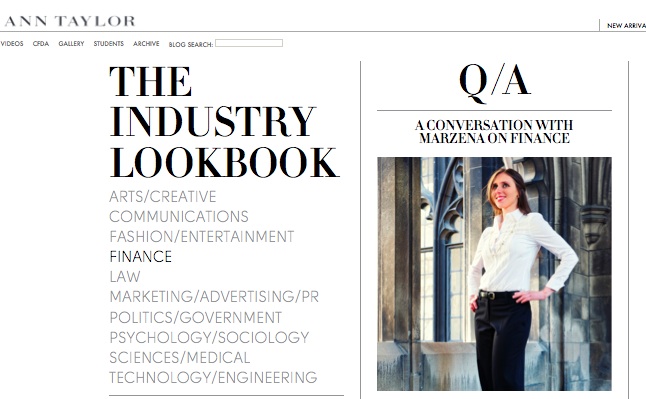
Have you checked out Ann Taylor’s “Style for Students” website yet? In the past I reviewed the brand’s social media efforts, and the brand’s new site addition, to me, comes across as one more way for Ann Taylor to both jump further into the fashion conversation online and focus on an even younger audience than in the past.

The site is split into different parts, including a great section where readers can find interviews the brand has done of women across a wide range of industries, including one with a woman in the finance industry just two years into her career. The interviewee answered questions pertaining to interview tips, what her job entails, and what role fashion plays in her work life. Oh, and the ever popular question of what to wear to an interview.

Interviews can be searched by industry, and it’s nice to see that the brand went beyond the style of women working in the fashion and entertainment industries.

Readers may also explore how other college girls from across the country are styling their Ann Taylor pieces. So far only 10 schools are listed (glad to see BU represented!), but I imagine this list will only grow.

If you “like” your favorite looks on the site, you’re automatically entered to win a $1,000 gift card to Ann Taylor. My only question now is, with all this focus on students, what about college girls on a college budget? Do student shoppers get a discount?

A visit to de Young’s exhibit, Balenciaga and Spain

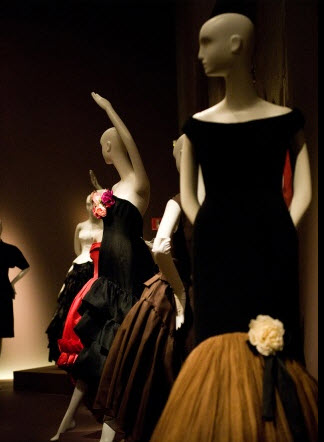
On Saturday I spent a very rainy morning trekking over to de Young for a dose of Cristóbal Balenciaga’s haute couture work and I wasn’t disappointed (only about the fact that I missed Anna Wintour by mere hours). Check out pictures from the opening night on Vogue.com.

Image credit: Vogue.com

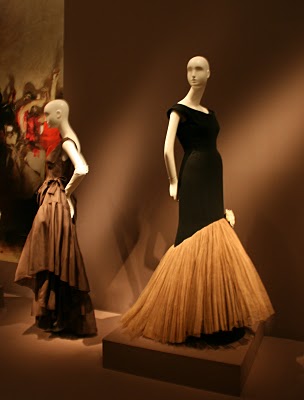
Balenciaga, dubbed “Fashion’s Picasso” by Cecil Beaton, has been known for such feats as getting women to stray away from wearing Dior’s new look (which popularized the hourglass shape) in the 1950s. Instead, Balenciaga created dresses with broader shoulders and less of a defined waist. Also during this era, he created voluminous jackets (like his 1957 cocoon coat) and skirts (specifically the balloon skirt, a style that became popular again just a few years back).

Image credit: StyleBistro.com

The Balenciaga exhibit clearly captured his work, showing a wide range of garments influenced by the likes of bull fighting, flamenco dancers, religion, and quite generally, all things Spain. Bold shapes and color combinations definitely made for an exciting roundup of looks. Of the 120 pieces on exhibit, the ones I liked the most were the flamenco inspired dresses. Don’t they just make you want to dance?

Image credits: Vogue.com and Grant K. Gibson

After the exhibit I popped into the cafe for lunch and enjoyed the Herb Roasted Wild Escolar with patatas bravas (basically, this means I had an amazing dish of fish over potatoes).

The exhibit, curated by Vogue’s Hamish Bowles, runs through July 4, 2011. Let me know your thoughts after you visit!

Branding in Motion: Part 1

An interview with Russell Volckmann on Branding in Motion


Image by Extra Medium

Ashley: What are some key things to consider when creating an online based brand?

Russell:

The first key assumption regarding developing any brand today is that virtually no brand can hide from the Internet. So whether a company’s business is conducted primarily online or offline is of little consequence. Brands are no longer only crafted and shaped internally then broadcasted hierarchically downward toward audiences to digest as receptacles of the brand. Company key stakeholders (employees, customers, peers, competitors) constantly interact with your brand online and shape that brand to suit their needs. And that includes a company’s brand messaging, visual identity, product or anything borne from that brand.

As a simple example, a company may find its logo in locations or environments that the original creators never intended. On social networks such as Facebook. On blogs or other online vehicles in the presence of other branded entities. Unintentionally co-branded alongside other brands. Placed in the midst of typography and colors that are not part of the company’s design system. And this has profound implications in terms of how flexible any brand needs to be—not just the logo or visual identity, but across a wide spectrum of brand expressions..

While the creators of a brand may certainly guide the intended use of the logo, they essentially have no control whatsoever over how it is used externally. Therefore an amazing amount of thought, strategy and testing needs to go into preparing a brand for the wild world externally.

In the familiar example of the logo, we need to ask how visually flexible is it in order to accommodate X number of usage scenarios, in addition to all the hard work that the logo needs to perform in order to live up to the brands core drivers–what we call the Brand Motor(TM). The logo seems simple. But in fact, distilling meaning into what drives an expression like the logo not so simple—let alone creating an expression that is flexible enough to survive in a myriad of environments—environments that are constantly in motion. That takes planning.

Just to be clear, though, the logo is not the brand. It is only one expression of the brand among sometimes hundreds of other key brand expressions specific to any one brand.

Next timeWhat sort of due diligence should brands do when conceptualizing their name/logo/etc?

Part 3 > What’s the first thing an (online) brand should do if they have a #prfail (they really mess up online)?

Part 4 > Should (online) fashion brands keep anything extra in mind that brands in other markets may not have to worry about?

How Moxsie’s BuyerChat Keeps Twitter Followers Engaged

There are more fashion brands and e-tailers on Twitter today than I can count, but only a handful that really stand out from the pack. Creativity, a clear voice, and audience participation must be components. And @Moxsie has all three.

Since October 2010, the San Francisco-based indie fashion e-tailer has been tweeting its BuyerChat events as a way to get its Twitter community more involved with choosing the types of clothing that gets sold on the site. BuyerChat participants may also have the chance to “attend” a behind-the-scenes look at new arrivals, buying meetings, and photo shoots.

According to Marketing Creative Manager Mayka Mei, the growth in participating has been interesting to watch.

“We see aspiring stylists bringing in their partners to participate, and we have a large enough group now that makes our impromptu introduction of #team[whatever] more meaningful. The greatest reward for administering BuyerChat on this end is watching our group of “regulars,” returning,” Mei says.

The event was created after the Moxsie team realized their community on Twitter (over 149,000 followers strong) would give them the opportunity to connect with fans they’ve never met in person.

“Moxsie specifically works with independent designers, so a lot of these companies don’t have the time or resources to focus solely on their social media,” Mei says. “Since Moxsie has such a devoted following, it’s just one thing we can do: leverage the opinions of the people who know the market best (the market themselves) – and it gives our designers exposure, too, of course.”

To date, Moxsie has held more than fourteen BuyerChats through which participants and winners were issued badges.
One Twitter participant, @JennieB, a veteran of the fashion industry, has participated in more than 10 such events.

@JennieB found Moxsie through doing research about social shopping sites selling indie designers’ clothes, and subsequently followed the brand on Twitter.

“I like the interaction with other Moxsie fans, with Moxsie themselves and I like that the company is actually having a conversation with me/us – and reacting to the things we say,” she says. “Moxsie has a great ‘voice’- clever and a little sassy, but also they come across as really nice.”

To date, @JennieB is one of just four people who have achieved the top status, “Buyer Guru”. She’s also won two $50 prizes for contributing the best tweet.

Think you can keep up? Visit http://shop.moxsie.com/buyerchat and sign up for the next BuyerChat, taking place today, March 23rd, at 2 pm PST. Follow @Moxsie on Twitter, and start chatting using the #buyerchat hashtag.

Introducing The Pretty Innovative Scoop

I’ve been getting a lot of great feedback on my daily Twitter paper that I publish so let me make a proper introduction.

The Pretty Innovative Scoop is a daily publication that goes live every morning at 8 am PST. The paper is broken up into a few main sections, including Headlines, Arts & Entertainment, Technology, Education, Stories, Health, and Leisure. On the front page is the live feed from the list I used to create the paper (you can choose from adding a Twitter list or select hashtags to generate content).

Content includes tweets about fashion and technology, from more than 200 Twitter accounts on my digital fashion list. Categories include:

Fashion Magazines/Sites, Fashion and Tech Magazines, Fashion and Tech Blogs, Style Blogs/Bloggers, E-Tailers and Social Shopping Sites, Wearable Tech Artists, Analysts, Fashion Networks, Personalities, Fashion Brands and Designers, Retail Stores, Fashion Week and Other Events, Fashion Illustrators, Fashion PR/Marketing

What I like best about the paper (and reading others’) is the organized format. Considering that I spend way too much time on Twitter (for work and for play), it’s nice to see the same content spread out in a newspaper format. Besides, I come from a print background in writing, so it’s nice to see real-time news return to a print publication style.

I’m Feeling Lucky

I treated myself to a new magazine this weekend, and if you couldn’t tell from the title of this post, I chose Lucky Magazine.

Not only was I (and still am) super excited about the piece on “90 Days of Outfits: Our genius styling guide to dressing for $5 a day!”, but was intrigued how technology was integrated throughout the magazine.

Here are my five favorites:

1. Behind-the-scenes video of select parts of the mag that draw you to the website by way of mobile-friendly bar codes, text message, or simply typing in luckymag.com on your browsers. Videos of Heidi Klum’s photo shoot, the last nine outfits of the 90 featured in the piece mentioned above, and how to get frizz-free hair with the products discussed on page 153 are some of the behind-the-scenes looks you can find. (Note: you must first download the free app at gettag.mobi before scanning the codes).

2. Invitation to connect with Lucky’s “digital concierge” by way of iPhone app or LuckyatYourService.com. Basically, by setting up an account on this site, you can save time shopping at work (whoops, on your lunch break). Browse items on the site by brand, price, color, and size and then choose the option to either find it online (like any other social shopping site ) or find it near you. After entering a few more details, the Lucky Concierge team will contact the store to see if the piece is available and put it on hold for you to pick up later in the day. Oh yeah, and you’ll hear back from the Lucky team within the hour during the business day by email or text confirming how to go about picking up your purchase.

3. Every page with items of clothing include a text-to-buy option, that lets you immediately purchase favorite items from the issue without having to hunt all over.

4. Blogger highlight #1: Lisa Mayock and Sophie Buhai of Venacavablogspot.com got a shout out for their clothing designs and blog, and between Feb. 7 and 11, guest blogged for Luckymag.com about the Lucky blogger conference, FABB, and New York Fashion Week.

5. Blogger highlight #2: A showcase of seven inspirational style bloggers and their spring trend obsessions, including the women behind alltheprettybirds.blogspot.com, seaofshoes.typepad.com, guestofaguest.com, manrepeller.com, naag.com, decadediary.typepad.com, theglamourai.com.

Great read this weekend, but the tricky part will be to stick to my budget since I’d really like to now own the wedges in the Top-Sider ad… the trench on page 91… the the woven belt on page 100, the purple dress on page 134… the dress on page 136… the Fendi on pae 138… the floral dress on page 195… the pleated skirt on page 199… the leather dress on page 202…

Something Old, Something New: An Interview with Wearable Tech Designer Joanne Hodge

Though there are some fabulous collections going down the runways during New York Fashion Week right now, sometimes in fashion, something old combined with something new can be just as intriguing as something never worn before.

Joanne Hodge, PhD Researcher at the Duncan of Jordanstone College of Art & Design at Dundee University of Dundee, Scotland, feels just this way.

“I like to find things that are imperfect (holes, rips, buttons missing, etc.) and turn them into something wonderful. There is something very poetic in turning something that was once loved, but has since been discarded, into something else that can be loved once more, all the while adding to the stories and wonder of the garment as it changes and evolves into something new,” Joanne says.

While working her masters (completed in 2009), she began to think about wearable technology and smart textiles as a possibility for study in the future because she has really enjoyed seeing how science and technology and fashion and textiles mesh, especially in terms of responsive and communicative clothing. Much of her inspiration has come from interactions with her friends and family, as well as from some of the wearables notables like Angel Chang, Joanna Berzowska, and Elena Corchero.

Past work includes cool integration of thermochromic inks, UV light, and fabric, such as this design, described as the “Multifunctional Bed Spread Top”. It was made from recycled white cotton bed sheets, Thermochromic ink, Photochromic ink, and some creative thinking. Not only does the wearer have the option of choosing which side to wear outwardly, to fold, belt or to button in different ways, but the garment will become unique to the wearer as well, because the inks react to warmth from touch, body heat, and UV light.

Joanne is currently working on developing research and design experiments in conjunction with her PhD, with a focus on what she calls “‘mindful’ remote communications”, and will be tweeting along the way. Follow her at @JoPrints for updates.

And look for her at the EAD Conference in Portugal in May, where she’ll be both presenting and exhibiting.

Free People’s Fashion Bloggers Introduce Themselves Through Flickr

Free People just tweeted an introduction to its two fashion bloggers, Jemma and Julia. As a site that offers clothing for women into soft Southwestern and chic hippie-like style, it’s no surprise that these two bloggers really embody the brand’s feel so well.

Jemma says she likes the little things in life. And her description of being adventerous holds true in just her move from the UK to the US alone. Her Flickr album features, among other things, braided headbands, her enjoying the outdoors, and my favorite picture, her as a little girl with a bright pink handbag.

Julia, on the other hand, claims she was born in the wrong time, saying she has an old soul and that she loves music, writing in her journals, and can find inspiration in almost anything (I’m with you, Julia!). Pictures included in Julia’s Flickr album are of the ocean, playing drums in Jamaica, and her bookshelf.

After reading about these two bloggers today, I’ve been inspired to do some creative writing tonight.