Imagine that you’re walking down the street looking into the high-end shops of Luxembourg and you happen to stumble across one that has just the aesthetic and clothing brands you’re looking for. You peruse the boutique and then twenty minutes later, after you’ve taken in the fashion, the people, and the music, you’re out the door with shopping bag in hand. Next stop, Monaco.
Normally this could take at least all day, but farfetch.com, a four-year-old fashion marketplace with more than 1,000 high-end fashion labels, lets users take this shopping trip in the matter of seconds.
If that’s not enough to get you ready to finally look for “that perfect white dress” or “a leather jacket that doesn’t like like the one everyone owns”, here are three ways the site differs from other online shopping destinations:
Boutique Shopping
Unlike other online retailers that let users search for wardrobe finds by the usual means, like size and brand, farfetch.com also offers a boutique search capability. The boutiques section of the site, organized by location, houses the list of locations where products featured on the site are originally found. And, each boutique is introduced by location, date founded, brands to look for, a photo of the interior, and the company’s history. It’s nice to see a little bit of the store’s history and personality without having to physically enter the store.
Suggestion:Include more photos from each boutique.
The Infusion of Music
By visiting the Projects section of farfetch.com, users are able to experience the musical stylings of artists featured in online music popup shops and fashion films with memorable tunes. What does music have to do with fashion? Fashion shows feature music. Boutiques feature music. Basically, any live fashion experience wouldn’t be complete without it.
Suggestion: feature the same tracks played for shoppers who visit each boutique’s physical location for online shoppers visit the boutiques’ pages on farfetch.com.
Global Style Trends
Beyond knowing what’s inside each boutique, farfetch.com also shows users styles trending globally. Posts feature everything from color trends to the site’s hottest selling products through both editorial posts from the farfetch.com team and guest bloggers.
Though I have a few minor suggestions for the site, overall farfetch.com’s clean, easy to navigate, site is a go-to destination for men and women interested in both contemporary and vintage clothing from retailers in some of the world’s most famous and up and coming fashion capitals. Just don’t forget to connect with the farfetch.com team on Facebook, Twitter and Pinterest if you need a break from shopping. You won’t even need your passport.
Too often I get asked, “how do I get more followers on Twitter?” A lot of times I want to reply with, “Well, how do you get more friends?”
Think about it, in offline world, people will probably gravitate to you for being friendly, interesting, and helpful.
Now, how does this translate to Twitter?
Being friendly
Being friendly on Twitter is different than in real life. You can’t show emotion in your face or give inflection in your voice, but what you can do is reach out to people.
If you see a great article and want to tweet it, go ahead and give that author credit when you give the post link. Chances are, that author will at least say thank you (I know I always try to!). If you are following someone whom you think gives great advice, let them know! Don’t grovel of course, but showing extra appreciation besides a retweet doesn’t go unnoticed.
Try using Listorious. It’s a great site where you can list your favorite Twitter users in different categories and see who’s top ranked across different topic areas or industries. Why is this helpful? So you can pinpoint who exactly you want to start reaching out to.
Jump in the conversation on Twitter chats. Find top level figures in your area of interest tweeting and most likely you’ll find at least one mention of a Twitter chat pretty early on.
Being interesting
Please tell me you don’t just talk about yourself, but that you offer pieces of advice, words of wisdom, and content that you created that’s actually professional. But beyond being a professional, you’re also a human first. Be funny, but don’t be inappropriate. What’s inappropriate? That’s up to you. But remember, Twitter is a public form of communication and your boss or your grandparents may just stumble upon it. I can’t tell you how many times I don’t find someone personable online and unfollow them, or at least lose interest.
Don’t just broadcast information (tweeting an article/blog post title and link). Remember, you’re a human so act like one.
Being helpful
Read the news! Offer the latest info by finding content through authority figures on Twitter, articles from top news outlets and blogs through your Google Reader. If you tweet once a day, people will forget about you. If you tweet 1,000 times a day, people will want to forget about you. Make sure you find a happy medium- maybe 8 to 10 tweets a day on a consistent basis- and make sure that content is a mix of new information, retweets, and engaging with others. Make sure at least 7 to 8 out of every 10 tweets are on topic. The other tweets can be funny or maybe more random, like mentioning you’re going to a baseball game that evening.
Also, when someone finds your content or skills especially valuable they reach out. Don’t over promise anything, but don’t be against helping someone new.
Through Twitter I was able to find my last full time position, have been able to “attend” many offline events taking place in time zones I couldn’t get to otherwise, have met new friends in San Francisco, and found many contacts related to my blog work.
Like everything else in life, you get what you give. There isn’t a magic answer to getting more followers, but really, do you need more followers? Try instead to focus on the audience you do have, even if it grows slowly. Having others engage with you on a deeper level than one click to follow (think: tweets and retweets of your content, true Twitter conversation, click-throughs to your site, and asking to connect off of Twitter) is weighted more heavily anyway, at least in my book.
Have a subject you want to learn more about? Email me at prettyinnovative@gmail.com.
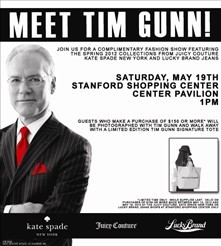
Anyone else out there miss Tim Gunn as the Project Runway mentor while watching the All Stars show? I know I did! I’m glad Tim isn’t laying low though because I really like his fashion sensibility, not to mention Tim Gunn-isms (remember “circuitous”?). Tim has been busy lately and, among other things, is currently the Chief Creative Officer of Liz Claiborne.
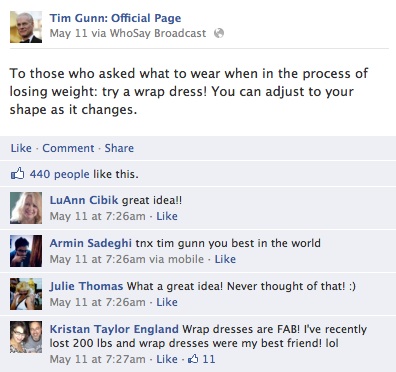
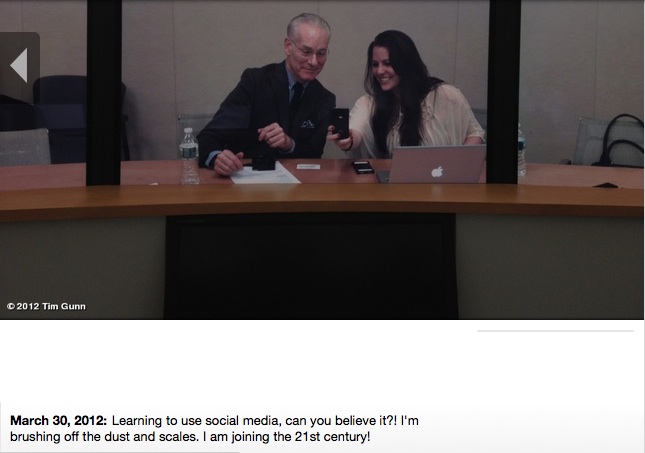
Tim recently took part in his first ever Facebook and Twitter Q&A session and my guess is that he ramped up his social media activity because of his trip to the Bay Area this week, the current heart of social media startups, where he will be hosting a fashion show on Saturday.
Questions during the Q&A ranged from things like looking slimmer to comfortable shoes for women other than sneakers, and Tim offered style advice to audiences both mediums.
To create this online forum across multiple sites, Tim (and most likely a team) added the WhoSay App- part of the WhoSay site, exclusive to celebrities- to the Tim Gunn Facebook page. Response volume was split pretty evenly between the audience of each medium, but in the future it may be easier for Tim to dedicate time to one medium or the other so as not to confuse people as to how they can interact with him best.
Even if Tim isn’t a social media guru yet, he is certainly a style guru. For anyone free this Saturday afternoon, head over to the Stanford Shopping Mall to see Tim Gunn host a live fashion show at 1 pm. Personally, I’m hoping to run into him in downtown San Francisco this weekend. Just in case? I’m brushing up on my vocabulary flash cards from my English class during sophomore year of high school.
Technology has influenced fashion since the invention of the sewing machine. High-technology has been incorporated into the fashion industry in many ways. Fashion shows that were previously exclusive events are now streamed online. QR codes allow an enhanced buying experience, teenage bloggers are dictating styles and new fabrics and embedded technologies have practically converted garments into wearable computers. Here’s a list of five ways technology is currently shaping fashion.
Onlookers at the live streamed Burberry show during LFW in Feb. 2011
1. Live streamed fashion shows
Fashion shows used to be exclusive events for the wealthy, fashionistas and journalists. Now companies like Burberry have turned their fashion shows into live events streamed to all their locations and onto a billboard-sized screen in Picadilly Circus. People can watch and buy the latest fashions directly from their smartphones via the Runway to Reality application.
2. Blogs
Bloggers have become a powerful force in the fashion world. Teenage bloggers are in the front row for some of the biggest fashion shows around the world. The power they have to make or break a style is incredible. With their approving blog post, a new designer can become instantly famous. The blogger’s weapon of choice is the smartphone or electronic tablet. They command armies of buyers with disposable income who want to be on the cutting edge of fashion.
Silk scarf created by Crystal J. Robinson
3. QR codes
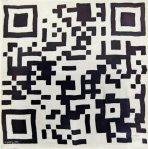
QR codes are the latest form of barcodes. The main difference is these codes have built-in links to websites. By scanning the QR code on a garment, a buyer can be whizzed to a web page or mobile magazine with additional information on the product and styling suggestions. Other applications overlay text on the garment’s scanned image describing the fabric qualities and fine tailoring.
4. Online Fittings
For those who can’t get to the store, mobile platforms bring the store to them. These mobile platforms permit you to print a digitally coded photo of a ring, for example. Cut out the ring’s image, and put it on your hand. When you hold your hand up to your webcam, the software shows what the real ring would look like on you. Hair salons can also offer a 3-D view of how you’d look in a particular hairstyle before you go under the scissors.
5. High-tech clothing
Fabric batteries can power computers that are built-into jackets and coats. Advanced applications of this technology can lead to clothing that can charge MP3 devices or smartphones. Textile batteries can also be used to heat clothing. Flexible, wearable displays are on their way. Rather than color t-shirts, you’ll soon see animated t-shirts and other garments. Athletic garments will soon be equipped with heart monitors and pedometers.
Who knows what advances tomorrow will bring? One thing is for sure. If there’s a way for it to be applied to the highly competitive and ever-evolving fashion world, somebody will figure out a way to use it.
~~~
Philip is a writer and fashion enthusiast, working in association with Aston Royal Fine Jewelers. Feel free to browse their selection of birthstone rings, and contact them with any questions you might have!
Last weekend my parents and I visited my sister, Caroline, at the University of Wisconsin-Madison to see her end of year fashion show. After years of seeing Caroline construct and model clothing, this was not only her first runway show I could attend, but also the debut of her first piece of wearable technology.
Caroline has been sewing for as long as anyone in our family can remember. During elementary school, our mom taught Caroline how to sew by making dresses together for Caroline’s American Girl Dolls. By the time Caroline entered middle school, she was teaching herself how to reconstruct vintage clothing and sewing patterns, and while in high school, Caroline completed summer programs in art and fashion at Cornell University and Marist College.
Caroline is currently finishing her junior year of college in Textile & Apparel Design. Last year, because hardly any of her pieces made the school fashion show (due to not being an upperclassman) Caroline hosted her own show instead, complete with more than 10 models and two live bands. For the past few semesters Caroline has been a contributor to College Fashionista (a blog focused on college street style), and, very recently Caroline returned from a 10 day trip to China sponsored by Kohl’s Department Stores.
It’s certainly exciting to have a designer in the family! And I couldn’t be prouder to share my exclusive interview with her about her light-up dress “Limelight”.
You usually do period costume pieces, so how does this dress fit into your aesthetic?
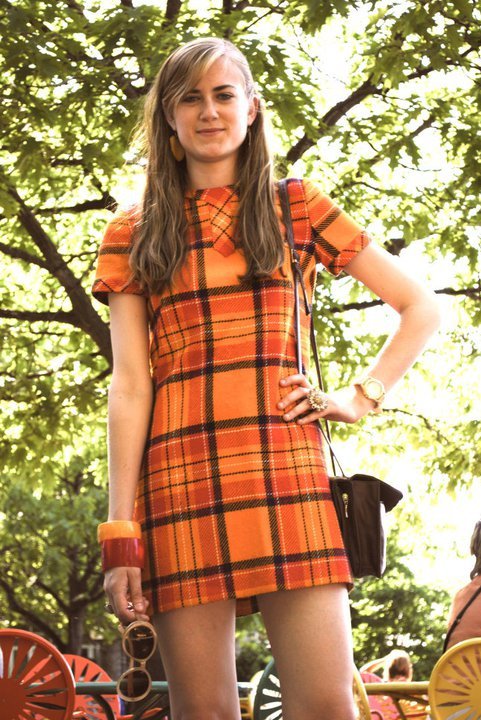
I myself wear a lot of feminine, historical-inspired outfits. I tell a new story every day with my clothing and play a different girl, if you will. I know who I am so my clothing doesn’t influence my behavior, but depending on my mood, what I am doing, and which side of me that I want to express for that day I pick out an outfit. My multi-dimensional self could dress like a flirty, 60’s mod gal one minute and then the next day show my more prim and proper side with a Victorian jacket and lace dress. Going into costumes someday is perfect for me because I can tell a story with the clothing that I make or style for others and have an audience enjoy it!
I was lucky enough to model this dress after the show!
What was your inspiration for the light-up dress?
I was inspired by the ever-creative and talented techno duo Daft Punk most of all, who have worn light up clothing as well as their famous helmets on stage. Seeing the light-up dress Katy Perry wore to the Met Gala last year made me realize that while this form of wearable technology is very modern, it can still be done in a more feminine way than a lot of people are doing it. I guess it’s the old-fashioned, romantic side of me coming through when I say that, though I’m all for being futuristic and inventive! While I was working on the dress I watched the Project Runway All Stars light-up challenge, just by chance, and was further inspired by it. Most of the designers on the show went harder and more edgy with their designs but I loved how soft and beautiful Austin Scarlett’s piece was. He ended up wining! I’d like to see more people do light-up clothing that is girly and pretty.
How hard was it to construct?
The hardest part of “Limelight” was figuring out a design that worked with the wire, which I solved by finding a sheer fabric with a vine design on it in white embroidery. I ran the wire along certain sections of the vine so it really became part of the fabric when you got up close, and from far away in the darkness you could just see the squiggly lines and not much else. It was meant to be an interesting juxtaposition depending where you were standing or what the lighting situation was. Constructing the dress was like any other garment, but it was more tedious than difficult to hand-sew on all of the 30+ feet of light-up wire with invisible thread.
When did you make it and how long did it take?
I designed the piece before my spring break in a night with a sketch and Illustrator flat because it was for an independent study on wearable technology. Over the course of three weeks after spring break I made several looks for our annual fashion show, but in total I’d say that my light-up dress, “Limelight”, took three full days to construct because it was completely patterned, lined, and had such tedious hand work at the end attaching the wire. This is about the typical time it takes me to make and pattern most garments.
What was the overall reaction?
I think a lot of people were surprised that it wasn’t a really modern and edgy piece, but in a good way. They were pleasantly surprised I’d say because it wasn’t what they expected when I told them about it. It was inspired by feminine 30’s silhouettes and the sheer white fabric that I found fit perfectly with my design idea. I had a few people tell me it looked vaguely like a wedding dress, but this was because it was a long white dress. They certainly changed their minds when the lights were off and my piece was lit up!
Would you consider making more pieces of wearable technology? What’s next?
I definitely want to construct at least one more piece of light-up clothing this summer, though it requires expensive materials!
I would like to made a really mod piece and shape the outline of a collar and other shirt-dress elements out of the light-up wire so that the piece pops. It would definitely be more modern than my last piece. I would also be interested in collaborating with an engineer to create clothing pieces that move and transform, or even show pictures and video.
Caroline will be spending the summer in Connecticut and working in the wardrobe department of the Westport Country Playhouse before moving to New York City in the fall to attend FIT for her senior year.
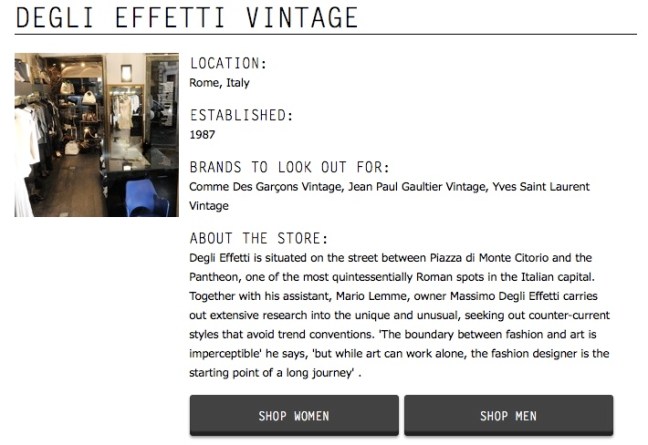
 Unlike other online retailers that let users search for wardrobe finds by the usual means, like size and brand, farfetch.com also offers a boutique search capability. The boutiques section of the site, organized by location, houses the list of locations where products featured on the site are originally found. And, each boutique is introduced by location, date founded, brands to look for, a photo of the interior, and the company’s history. It’s nice to see a little bit of the store’s history and personality without having to physically enter the store.










 pretty-innovative.com